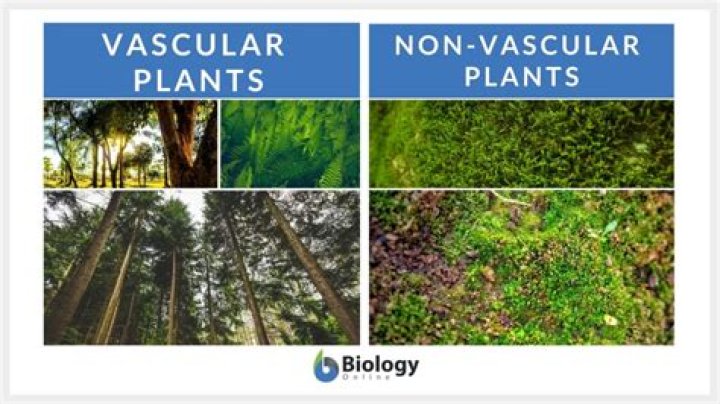
Nonvascular plants are commonly found in moist environments so that they are always close to a water source and can absorb the water right into the main part of the plant without relying on roots.
Can nonvascular plants live anywhere?
Non vascular plants, unlike vascular plants, do not contain conducting tissue such as xylem. Examples of non vascular plants or bryophytes include mosses, liverworts and hornworts. While many species of non vascular plants require moist environments, these organisms reside throughout the world.
Where do nonvascular seedless plants live?
Nonvascular Plants: Environment and Morphology They are less derived than seedless vascular plants and seed plants, but the nonvascular plants are highly successful in the environments they inhabit. As you walk through a wooded area, you will likely find mosses growing on rocks, rotting wood, trees, or on the ground.
Where does a vascular plant live?
These small, inconspicuous plants most often occur in aquatic or wet terrestrial habitats in tropical and subtropical regions. They represent the nearest living relatives of ancient tree lycophytes that dominated the coal-forming swamps of the Carboniferous.
What makes a plant non-vascular?
Non-vascular plants are plants without a vascular system consisting of xylem and phloem. Instead, they may possess simpler tissues that have specialized functions for the internal transport of water. Because these plants lack lignified water-conducting tissues, they can’t become as tall as most vascular plants.
How can you tell if a plant is vascular or nonvascular?
The root in vascular plants is true with branches that support and adhere to the plant to the soil to obtain nutrients from it. Non-vascular plants have rhizoids with fine hair-like structures instead of true roots. The roots absorb the water and mineral required for the plant from the soil.
Are Anthophyta vascular?
All members of the phylum Anthophyta are vascular. This means their leaves and other structures have clearly defined veins to transport fluids and nutrients throughout the plant.
What makes a plant vascular?
The components of the plant vascular system. Vascular system, in plants, assemblage of conducting tissues and associated supportive fibres. Xylem tissue transports water and dissolved minerals to the leaves, and phloem tissue conducts food from the leaves to all parts of the plant.
How do you know if a plant is vascular?
Characteristics of Vascular Plants
- Roots. The stem of the plant is behind the derivation of the roots which are the group of simple tissues.
- Xylem. The xylem is a tissue that supplies water throughout the parts of the plant.
- Phloem. The phloem is known as the plant’s food supply system.
- Leaves.
- Growth.
Which of the following is non-vascular?
In the human body, few structures do not have blood vessels, such as the lens of eyes. Cartilage is found near the joints, in the nose, in ears, etc. are some of the examples of avascular tissues.
What kind of environment does a non vascular plant live in?
Nonvascular plants are low-growing, reproduce with spores, and need a moist habitat. Similarly, what type of environment do nonvascular plants live in? Unlike angiosperms, non-vascular plants do not produce flowers, fruit, or seeds. They also lack true leaves, roots, and stems.
How are algae an example of a nonvascular plant?
However, some algae do have specific tissues, some of which are even specialized for water transport. An alternate theory supposes that some algae developed into vascular plants, where other algae became the modern nonvascular plant. 1. A scientist is trying to grow a nonvascular plant which is 20 feet tall. Why is this unlikely?
Which is a non vascular plant that lacks xylem?
Mosses are non-vascular plants with about 12,000 species classified in the Bryophyta. Unlike vascular plants, mosses lack xylem and absorb water and nutrients mainly through their leaves.
How are non vascular plants different from angiosperms?
Updated July 16, 2018 Non-vascular plants, or bryophytes, include the most primitive forms of land vegetation. These plants lack the vascular tissue systemneeded for transporting water and nutrients. Unlike angiosperms, non-vascular plants do not produce flowers, fruit, or seeds. They also lack true leaves, roots, and stems.