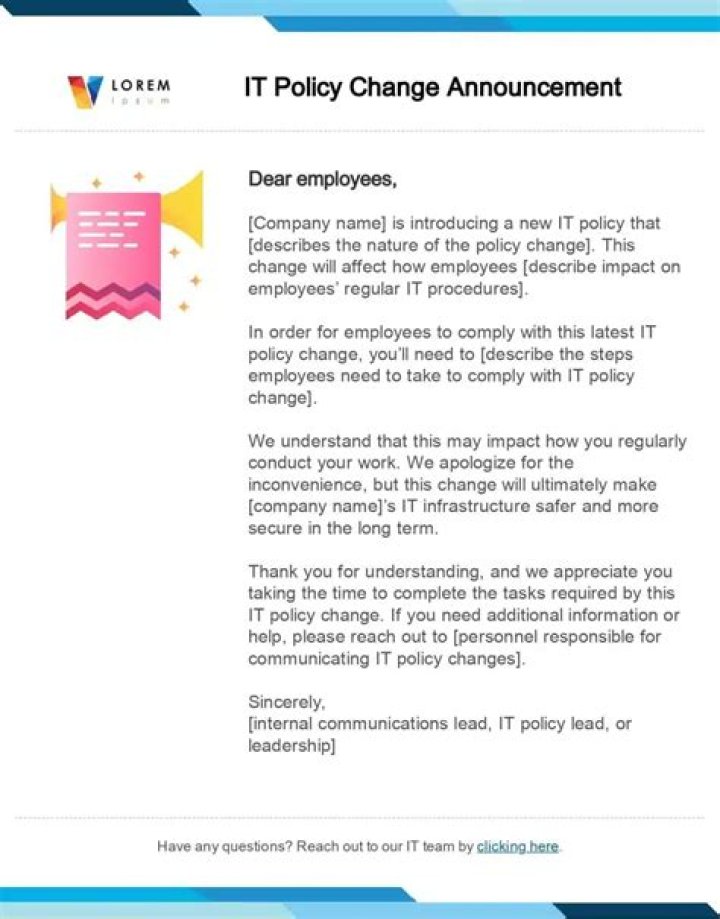
The purpose of an email policy is to set proper expectations with your employees. What are the rules and guidelines regarding email and what happens if you ignore the rules? The email policy should be written and reviewed with the employee at the time of employment.
Why is it important to follow procedures?
When employees follow procedures, they perform tasks correctly and provide consistent customer service. This enhances the quality of your organization’s products and services. And, in turn, improves your company’s reputation. Employees can know they are fulfilling their roles and take pride in their work.
Why should employees follow company policies?
Advantages of Having Workplace Policies:
- Provide employees with awareness regarding expectations, ex: behaviour, performance standards, etc.
- Providing clear response across the organization when dealing with situations.
- Provides rules for better decision making.
- Employees will be treated without any bias.
What is the importance of policy in an organization?
Policies define the goals of an organization and provide guidance about how to achieve objectives. Policies identify key activities, such as the collection of rental arrears and capital replacement planning. Policies also address things such as: general building rules.
When should you not use email at work?
DON’T use email:
- To give bad or negative news.
- To give complex, detailed or lengthy information or instructions.
- When the receiver deserves an opportunity to give immediate feedback or response.
- When there might be nuance or context that can’t be understood by written words; to express feelings.
What is an acceptable use policy?
An acceptable use policy (AUP) is a document stipulating constraints and practices that a user must agree to for access to a corporate network or the Internet. Many businesses and educational facilities require that employees or students sign an acceptable use policy before being granted a network ID.
What happens if you don’t follow policies and procedures?
Doing nothing to secure and actively manage your policies leaves your organization exposed to liability. Policy negligence leaves you at risk for financial losses, security breaches, and a ruined reputation.
What are advantages of stored procedures?
The main advantages of stored procedure are given below:
- Better Performance – The procedure calls are quick and efficient as stored procedures are compiled once and stored in executable form.
- Higher Productivity –
- Ease of Use –
- Scalability –
- Maintainability –
- Security –
Why is it important to follow policy and procedures?
Policies and procedures are an essential part of any organisation. Together, policies and procedures provide a road map for day-to-day operations. They ensure compliance with laws and regulations, give guidance for decision-making, and streamline internal processes.
Why does your company need an employee email policy?
Here are just five reasons your company needs an employee email policy: Protect data. Sloppy email habits can result in malware being downloaded onto company computers, which can wreak havoc with your important business files.
What can I do without a company email policy?
Without a company policy regarding email usage, it is possible for employees to download content from their emails which can be accessed, used, distributed and shared by other employees. 3. Email policies can be used to standardize email formats, including email signatures. The corporate emails used by employees represent the business.
Which is an example of a corporate email policy?
The corporate emails used by employees represent the business. With this, it is important for employees to make sure that how they will present themselves through email transactions are beneficial to the branding and image development of the company. 4. Email policies can easily counter lost productivity.
What should a company do about inappropriate emails?
In fact, your company should put a protocol in place to investigate and address any reports of inappropriate email in a timely manner. Your email policy should explain what emails should be retained, where and for how long. Keep in mind that different industries and businesses may be subject to different regulatory standards.