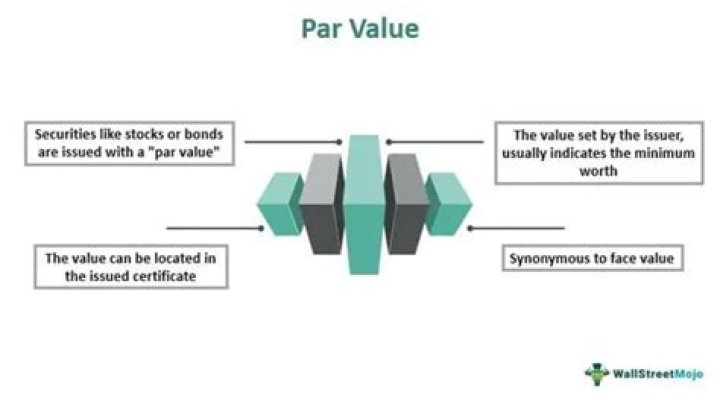
Par Value of Bonds The par value is the amount of money that bond issuers promise to repay bondholders at the maturity date of the bond. A bond is essentially a written promise that the amount loaned to the issuer will be repaid.
How do you calculate bonds payable?
It is calculated by multiplying the $11,246 (carrying value of the bonds) times 10% (market interest rate) × / (semiannual payment).
Why is par value so low?
No par value stock is shares that have been issued without a par value listed on the face of the stock certificate. Historically, par value used to be the price at which a company initially sold its shares. Companies set the par value as low as possible in order to avoid this theoretical liability.
Is bonds Payable an asset?
Bonds payable is a liability account that contains the amount owed to bond holders by the issuer. This account typically appears within the long-term liabilities section of the balance sheet, since bonds typically mature in more than one year.
What happens when face value is increased?
For one, it increases the number of shares outstanding. A company with shares of Rs 10 would have 10 times more shares if the face value were to be reduced to Re 1. This would increase direct and indirect costs associated with managing more shares, which a company may not be willing to bear.
How does coupon rate affect par value of Bond?
The coupon rate of a bond as compared to the interest rates in the economy determines whether a bond will trade at par, below par, or above its par value. The coupon rate is the interest payments that are made to bondholders, annually or semi-annually, as compensation for loaning the issuer a given amount of money.
What does it mean when a bond is at par?
Related Terms. Short for “par value,” par can refer to bonds, preferred stock, common stock or currencies, with different meanings depending on the context. Par most commonly refers to bonds, in which case it means the face value, or value at which the bond will be redeemed at maturity.
Which is more important par value or nominal value?
In the case of equity, the par value has very little relation to the shares’ market price. Par value is also known as nominal value or face value. One of the most important characteristics of a bond is its par value. The par value is the amount of money that bond issuers promise to repay bondholders at the maturity date of the bond.
What is the interest rate on a 4% bond?
For example, a bond with par value of $1,000 and a coupon rate of 4% will have annual coupon payments of 4% x $1,000 = $40. A bond with par value of $100 and a coupon rate of 4% will have annual coupon payments of 4% x $100 = $4.