The scientific method works best when you have a problem that can be measured or quantified in some way. 2. Form a hypothesis. A good format for a hypothesis would be, “If we do XX, then YY will happen.” Remember, the hypothesis should be measurable so it can help you solve the business problem identified in step one.
How does the scientific method help scientists?
The Scientific Method helps you put together experiments, use data to find conclusions and interpret them. In short, the Scientific Method is a step-by-step process: Predict what the hypothesis may lead to and conduct an experiment to test it out. Analyze the data to draw a conclusion from your findings.
Do scientists use the scientific method to solve problems?
The scientific method is a systematic way of studying a problem. Use of this method is not limited solely to scientists. In fact, you have probably used the scientific method from time to time even though you were not aware of it.
What is the correct sequence of scientific method?
The basic steps of the scientific method are: 1) make an observation that describes a problem, 2) create a hypothesis, 3) test the hypothesis, and 4) draw conclusions and refine the hypothesis.
What are the six components of scientific investigation?
The scientific method describes the processes by which scientists gain knowledge about the world. It’s characterized by six key elements: questions, hypotheses, experiments, observations, analyses, and conclusions.
What is scientific method example?
Example of the Scientific Method Hypothesis: If something is wrong with the outlet, my coffeemaker also won’t work when plugged into it. Experiment: I plug my coffeemaker into the outlet. Result: My coffeemaker works! Conclusion: My electrical outlet works, but my toaster still won’t toast my bread.
What are the 10 steps of the scientific method?
Steps in the Scientific Method
- 1 – Make an Observation. You can’t study what you don’t know is there.
- 2 – Ask a Question.
- 3 – Do Background Research.
- 4 – Form a Hypothesis.
- 5 – Conduct an Experiment.
- 6 – Analyze Results and Draw a Conclusion.
- 7 – Report Your Results.
What is the correct steps in the scientific method?
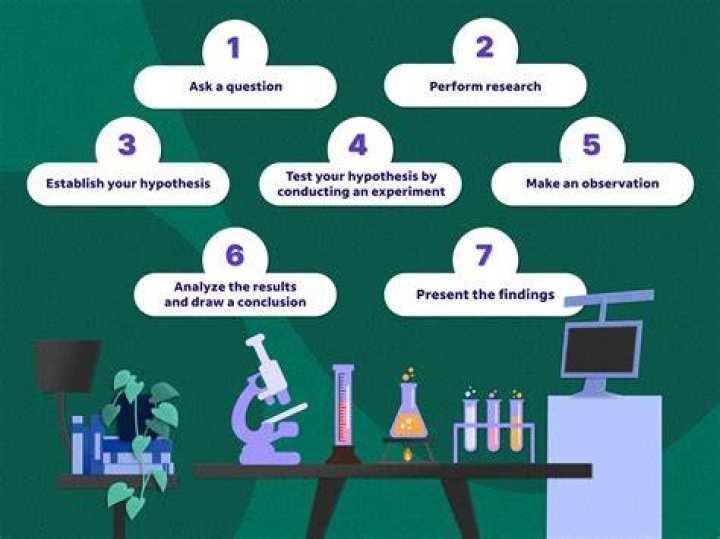
What are the 7 steps in a scientific investigation?
The seven steps of the scientific method
- Ask a question.
- Perform research.
- Establish your hypothesis.
- Test your hypothesis by conducting an experiment.
- Make an observation.
- Analyze the results and draw a conclusion.
- Present the findings.
Are there any problems with the scientific method?
“Ninety percent of the experiments I did as a scientist didn’t work out,” says Bill Wallace, a former biologist with the National Institutes of Health. “The history of science is full of controversies and mistakes that were made,” notes Wallace, who now teaches high school science at Georgetown Day School in Washington, D.C.
How is the scientific method used in everyday life?
As such, everyday problems would benefit by employing the scientific method. We will study how the scientific method can be used in daily life. Let us take a look at the wet foot problem discussed in Chapter 1.
How can science be used to solve society’s problems?
Science is the systematic study of the natural world, through observation and experiment. Technology is the use of scientific knowledge for practical purposes, to complete tasks that wouldn’t be possible without it. Technology can be super simple, like the wheel, or super complicated, like the personal computer.
Do you think the scientific method is a myth?
But scientists rarely follow the steps of the scientific method as textbooks describe it. “The scientific method is a myth,” asserts Gary Garber, a physics teacher at Boston University Academy. The term “scientific method,” he explains, isn’t even something scientists themselves came up with.