14 ways to become a charismatic leader
- Remember, you don’t have to be the most attractive person in the room.
- Make people feel like they’re the most intelligent, impressive and fascinating person in the room.
- Your presence should always be present.
- Think of something pleasant so you appear to be sincere.
What are the qualities of a charismatic leader?
5 Characteristics of a Charismatic Leader
- Confidence. Many of the most powerful and successful leaders exude confidence.
- Creativity. Charismatic leaders often think outside the box and aren’t afraid to take risks.
- Vision.
- Determination.
- Communication.
Can charismatic leadership be trained?
Charismatic leadership can actually be taught. Recent research conducted by a team of scientists led by John Antonakis from the University Lausanne Business School, shows that training managers a specific set of charismatic leadership tactics improves their charisma, and thus, their effectiveness as leaders.
Who is an example of charismatic leadership?
What are some examples of charismatic leaders? Martin Luther King, Adolf Hitler, Fidel Castro, Nelson Mandela and Winston Churchill are all examples of charismatic leaders. Being a charismatic leader can be both good and bad.
What is the dark side of charismatic leadership?
However, there is also a “dark side” to charismatic leaders. They can increase risk levels to organizations and threaten the well-being of members. The personalized need for power, negative life themes, and narcissistic tendencies of personalized charismatic leaders can lead to unethical and destructive behavior.
Why is charismatic leadership bad?
Indeed, a Cambridge University study found that charismatic leaders can be a really bad thing, as they tend to overwhelm their organizations. The study found that a charismatic leader can cause their followers to suppress their emotions, which reduces job satisfaction and the potential for collaboration.
What four characteristics are attached to a charismatic leader?
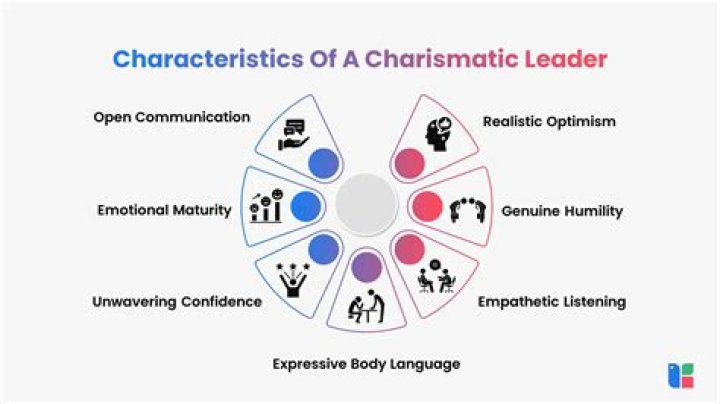
The following are some of the most prominent characteristics of charismatic leadership.
- Communication. Charismatic leaders have extraordinary skills in communication.
- Maturity.
- Humility.
- Compassion.
- Substance.
- Confidence.
- Positive body language.
- Listening skills.
Is charisma a skill or trait?
Charisma is a skill that can be learned and honed.
What is the charismatic leadership style?
Charismatic management or leadership is a form of professional guidance or management built on a foundation of strong communication skills, persuasiveness, and maybe even a little bit of charm to help them get the most out of everyone that works for them.
What is an example of charismatic?
If you consider the essence of charismatic leadership – dominance, confidence, strong convictions and the ability to get followers on your side – then one example of charismatic leader from history could be Adolf Hitler. He was able to paint a vision of a future for people, which they took at face value.
What is the role of a charismatic leader?
Charismatic leadership is the process of encouraging certain behaviors in other via force of personality, persuasion and communication. Charismatic leadership inspire their followers to do things or to do things better.
What’s the difference between charismatic and transformational leaders?
Their main difference is focus and audience. Charismatic leaders often try to make the status quo better, while transformational leaders focus on transforming organizations into the leader’s vision.
What are the characteristics of a quality leader?
The importance of leadership as an integral part of quality management is well documented. closely aligned what defines quality leadership. Leadership is typically defined by the traits, qu alities and behaviors of a leader. What traits reflect quality leadership and which leadership theories are most closely aligned to it.
How does leadership style contribute to teaching and learning?
– H0: Leadership style does not contribute to teaching and learning process in education. – H1: Leadership style contributes to teaching and learning process in education. Responses from question number five will be applied in testing the hypothesis. 1.4.2 Hypothesis II